First impressions in corporate environments are formed within seconds of stepping off the elevator. Before a prospective client sits down for a pitch or an executive joins an annual strategy session, your physical space speaks for your business.
At the center of that visual impact sits your corporate signage.
A reception feature wall and an executive boardroom demand two fundamentally different things. The lobby sign introduces the brand's scale, prestige, and energy to every visitor who walks in. The boardroom sign, on the other hand, lives in a focused space under close scrutiny, where subtlety, architectural harmony, and zero visual glare matter most.
Choosing the right material isn't just an aesthetic preference—it is a functional engineering decision involving weight, lighting reflection, maintenance, and long-term durability.
Here is a comprehensive guide to choosing the right materials for office lobby and boardroom signage, based on architectural fit, brand identity, and fabrication precision.
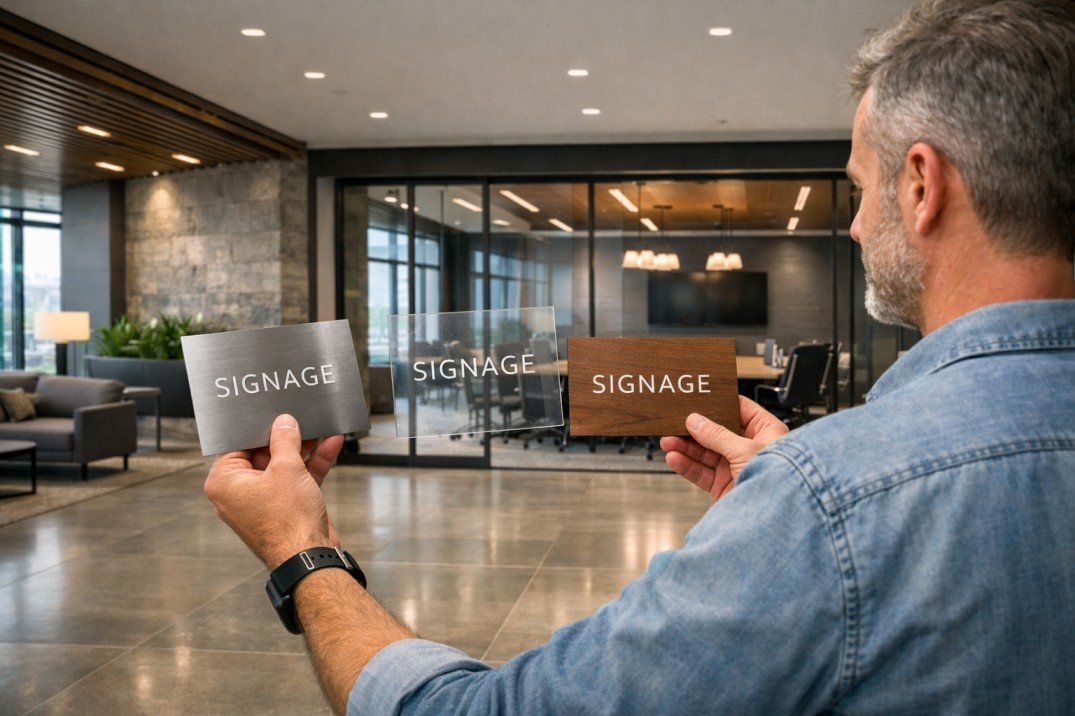
1. Stainless Steel (SS): The Standard for Executive Authority
Stainless steel remains the gold standard for high-end corporate environments, financial firms, consulting groups, and enterprise headquarters. It immediately conveys permanence, precision, and institutional strength.
Key Finishes Available:
-
Brushed / Hairline Finish (Satin): Diffuses direct light and minimizes visible fingerprints. Ideal for high-contact reception desks and brightly lit boardroom walls.
-
Mirror / Polished Finish: Reflects ambient room light like chrome. Best suited for deep focal lobby feature walls where light can bounce off the surface without blinding viewers.
-
Titanium / PVD Coating: Allows stainless steel to take on rich shades of gold, rose gold, bronze, or champagne without losing the natural resilience of steel.
Where It Works Best:
-
Lobbies: Large 3D fabricated channel letters mounted on textured marble, fluted paneling, or concrete walls.
-
Boardrooms: Precision laser-cut flat cut metal (FCM) letters mounted flush against dark acoustic panels or wood veneer.
Fabrication Insight: Look for Grade 304 stainless steel. While Grade 316 is reserved for heavy outdoor marine applications, Grade 304 provides complete rust immunity, flawless CNC laser edge cuts, and crisp beveling for interior architectural displays.
2. Cast Acrylic: Crisp Geometry & Boundless Color Matching
When your corporate branding relies on exact brand guidelines, PMS color matching, or smooth backlighting, high-grade cast acrylic is unbeatable.
Unlike cheap extruded plastics that warp or yellow under office lights, cell-cast acrylic provides structural rigidity, crystal-clear edges, and optical clarity comparable to glass at half the weight.
Popular Treatments & Variations:
-
Solid Pigmented Acrylic: Gloss or matte finish matched to brand colors, laser-cut to sharp dimensional letters (typically 5mm to 20mm thickness).
-
Dual-Layer Dimensional Signs: Clear acrylic panels with polished flame edges, backed with frosted film or painted typography, mounted using brushed aluminum wall standoffs.
-
Laminated Metal-on-Acrylic: An industry favorite where a thin face of real brushed brass or aluminum is chemically bonded to a thick black or white acrylic core. You get the executive presence of solid metal at a fraction of the structural wall load.
Where It Works Best:
-
Lobbies: Dynamic multi-layered 3D logo badges, vibrant tech office entrances, and contemporary co-working reception counters.
-
Boardrooms: Frosted acrylic room plaques and minimalist transparent panel signs that maintain visual openness in glass-partitioned conference rooms.
3. Solid Brass & Bronze: Timeless Warmth and Craftsmanship
For law chambers, wealth advisory practices, luxury real estate developers, and legacy institutions, cold metals like chrome and raw steel can sometimes feel too industrial. Brass and architectural bronze inject immediate warmth, prestige, and heritage.
Finish Considerations:
-
Satin Brushed Brass (Clear Lacquered): Delivers a rich golden glow protected by an anti-tarnish polyurethane topcoat that prevents fingerprint oxidation.
-
Antique / Patinated Bronze: Chemically treated to provide an aged, dark-toned depth with lighter highlights, pairing naturally with natural wood, brick, and limestone.
Where It Works Best:
-
Intimate executive suites, private client briefing rooms, and historic enterprise lobbies where the decor emphasizes natural materials like walnut, leather, and granite.
4. Architectural Wood & Veneers: Warm, Modern, & Organic
With workplace architecture leaning heavily into biophilic design, sustainable interiors, and acoustic comfort, wood signage has transitioned from rustic novelties into sophisticated corporate fixtures.
Hardwoods like American Walnut, White Oak, and Teak provide tactile warmth that softens high-tech, glass-heavy corporate lobbies.
How to Style Wood Corporate Signage:
-
Inlaid Mixed Materials: Recessing laser-cut brushed brass or matte-black acrylic letters directly into a CNC-milled natural wood slat wall.
-
Dimensional Wood Blocks: Solid-cut hardwood letters treated with clear matte sealants that highlight natural grain variation.
Where It Works Best:
-
Lobbies: Creative agencies, sustainable energy firms, architecture studios, and modern tech campuses.
-
Boardrooms: Mounted over felt or acoustic fabric backing boards to assist in room noise dampening while presenting a calm, grounded executive aesthetic.
Lobby vs. Boardroom Signage: Material Comparison
| Material | Aesthetic Profile | Best Environment | Lighting Compatibility | Maintenance Level |
| Brushed Stainless Steel | Modern, premium, authoritative | Reception feature walls, enterprise boardrooms | Front-lit, Halo/Back-lit, Spotlights | Low (wipe with microfiber) |
| Solid Cast Acrylic | Crisp, versatile, vibrant | Tech startups, agencies, modern lobbies | Direct face-lit, Edge-lit, Ambient light | Low-Medium (avoid abrasive cleaners) |
| Satin Brass / Bronze | Heritage, luxurious, warm | Law firms, luxury finance, private suites | Warm spotlights, soft downlighting | Low (if lacquered) |
| Metal-Faced Acrylic | Executive weight without heavy load | Standard drywall receptions & tenant suites | Spotlights, direct ambient light | Low |
| Architectural Hardwood | Organic, sustainable, biophilic | Creative lobbies, acoustic boardroom walls | Warm overhead directional track lights | Medium (periodic oiling/dusting) |
Factoring in Illumination: How Light Changes Material Choice
A material that looks stunning in a 3D architectural rendering can fail on-site if ambient and active lighting are ignored:
1. Halo-Lit (Reverse Channel) Letters
The LEDs sit inside hollow metal letters and project backward against the wall, creating an aura of soft light around the logo.
-
Best Material: Solid stainless steel, titanium-coated aluminum, or brass faces.
-
Crucial Wall Rule: Halo lighting requires matte, non-reflective wall textures (painted drywall, wood slats, or honed stone). If installed against high-gloss polished marble, the individual LED diodes will mirror off the stone, ruining the effect.
2. Edge-Lit Glass & Acrylic Displays
Ideal for low-profile boardroom nameplates and meeting room indicators. Light passes horizontally through clear acrylic and refracts off frosted or laser-etched lettering.
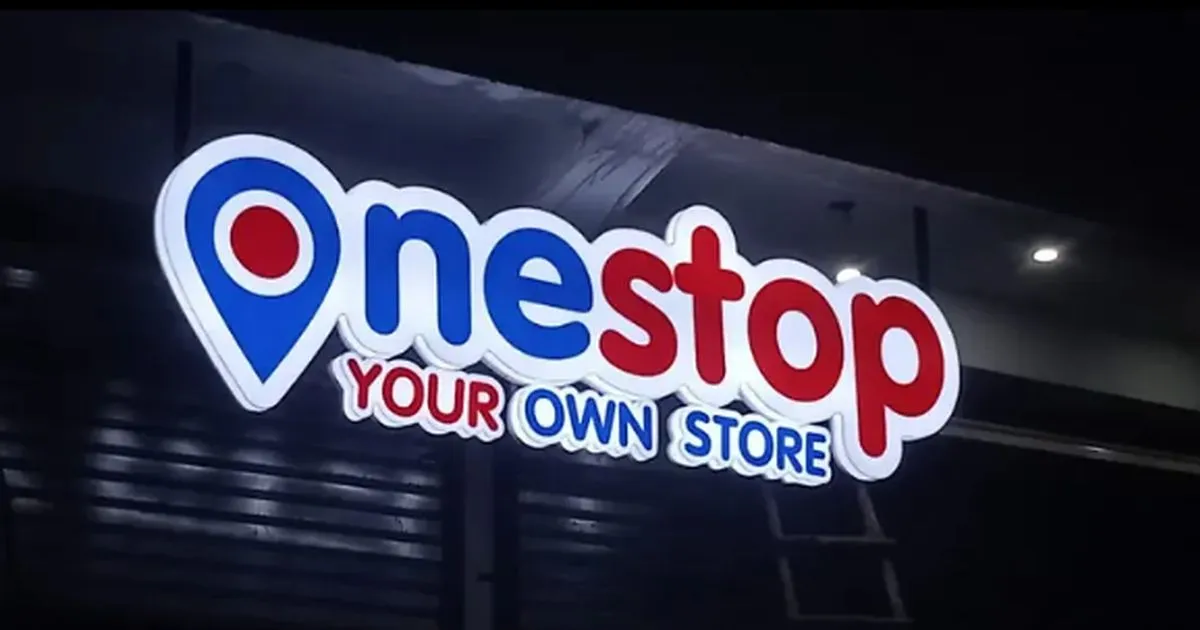
3. Front-Lit 3D Lettering
Requires translucent acrylic letter faces wrapped in metal or painted aluminum returns (sides). This ensures even, uniform light distribution across complex brand color palettes.
4 Practical Pitfalls to Avoid When Selecting Signage Materials
-
Ignoring Wall Substrate Strength: A solid sheet of brass or 12mm stainless steel plate cannot simply be fixed to a single sheet of plasterboard without backing reinforcement or structural wall anchors. Always consult your signage fabricator during the drywall framing stage.
-
Boardroom Glare: High-gloss finishes (mirror stainless steel, un-frosted acrylic) catch direct glare from boardroom presentation screens and ceiling downlights, making the sign illegible during video conferences. Stick with satin, hairline, or matte finishes inside meeting rooms.
-
Overlooking Viewing Distances: In a 50-foot wide atrium lobby, thin 3mm letters disappear into the background. Dimensional return depth (25mm to 75mm channel depth) is critical for shadow formation and legibility from a distance.
-
Subcontracted Fabrication vs. Integrated Manufacturing: When design, material sourcing, and mounting are fragmented across multiple vendors, letter margins shift, wiring remains exposed, and finish colors clash. Working with an integrated in-house manufacturer ensures material grades, CNC cutting tolerances, and installation depths align with your original architectural drawings.
Transform Your Workspace with Artroot Signages
At Artroot Signages, we turn brand identities into physical landmarks. With over 24 years of end-to-end manufacturing precision out of our New Delhi facility, we engineer, fabricate, and install custom corporate signage across Delhi NCR and India.
Whether you need precision laser-cut 3D stainless steel letters for your headquarters, custom-milled acrylic reception displays, or architectural wayfinding, we control the entire process from structural design to on-site mounting.
Planning an office fit-out or rebranding your commercial space?
Explore our Custom Signage Solutions or contact our fabrication engineering team today at +91 83770 04848 / info@artrootsignages.com for a structural site survey and material consultation.